


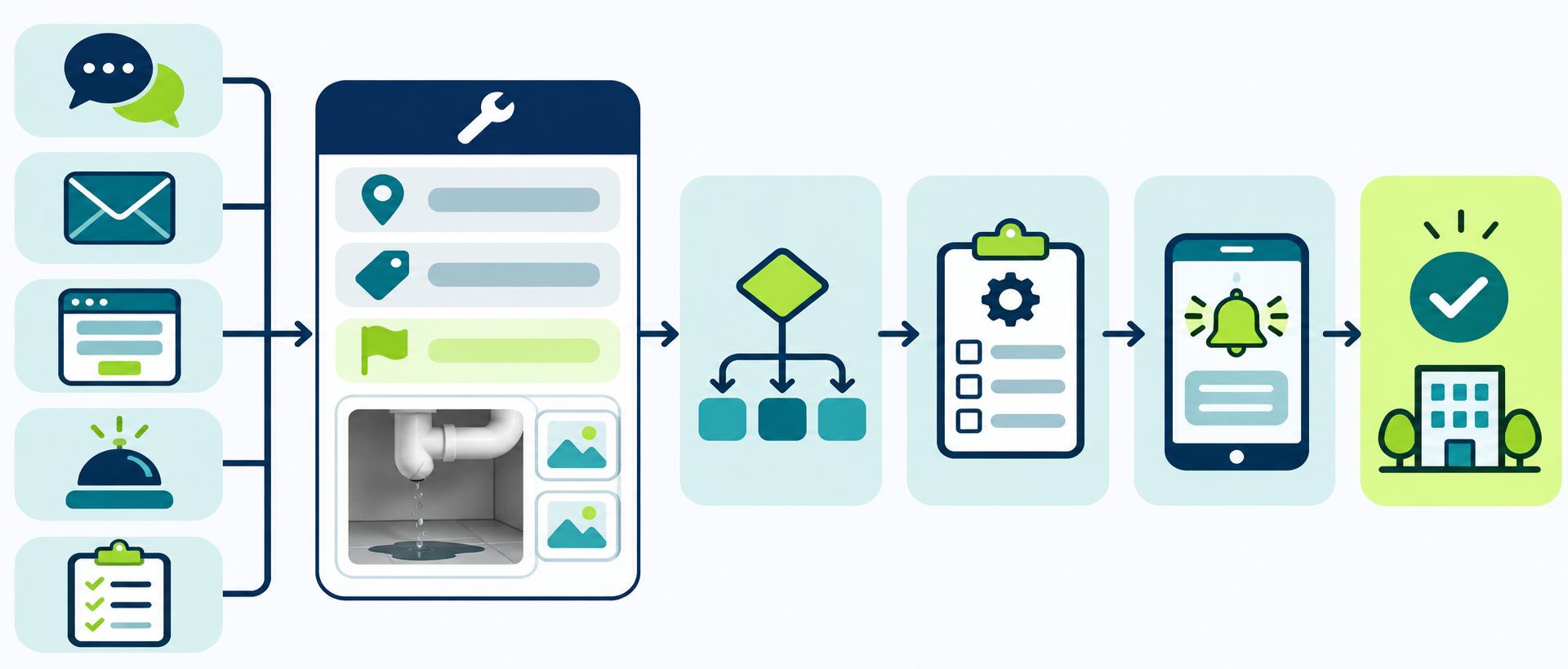
Short answer: Tenant maintenance request intake software gives property teams one structured queue for requests arriving through WhatsApp, email, a portal, reception, or an inspection. Each request should retain the tenant, site, unit, asset, issue, urgency, attachments, and communication history, then move to a named owner or work order without retyping.
The goal is not to force every tenant into one channel. It is to give the operations team one reliable process behind every channel. That matters when a property portfolio includes different buildings, tenant arrangements, front-desk practices, contractors, and service-level commitments.
Why a shared inbox is not yet a maintenance intake system
A shared inbox can collect messages, but a maintenance team also needs operational context. A message such as “the aircond is leaking again” is incomplete until the team knows the property, floor or unit, affected equipment, severity, access window, reporter, and whether the same fault was handled before.
When those details remain in chat threads, spreadsheets, and individual memories, coordinators must reconstruct the request before assigning it. A structured request-management workflow makes the required fields visible and keeps the original conversation attached to the operational record.
What every tenant request record should capture
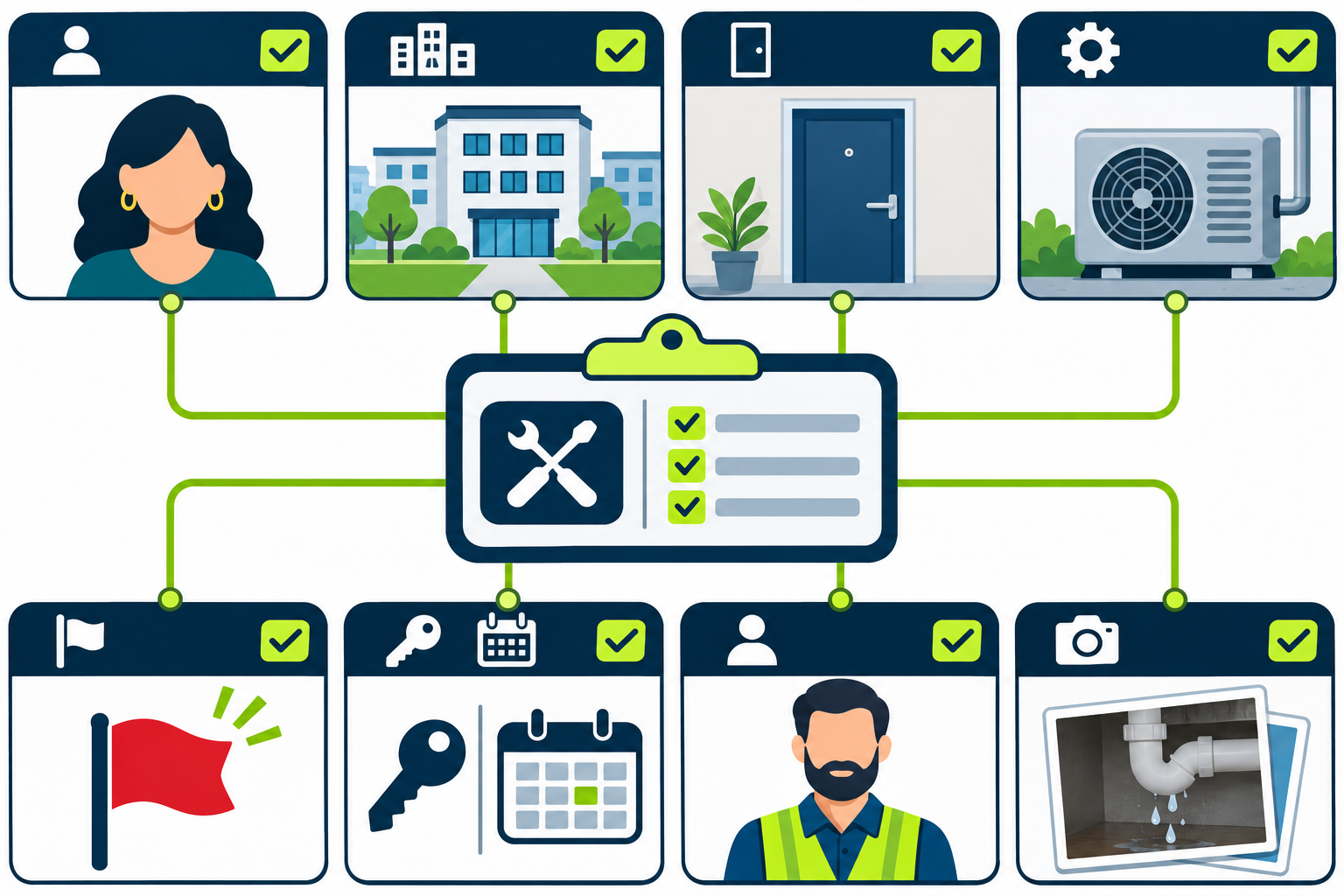
- Requester: tenant, occupant, reception staff, inspector, or property representative.
- Location: portfolio, building, floor, unit, room, or common area.
- Asset context: equipment or fixture where known, including an asset ID when available.
- Issue and evidence: a clear description plus photos, video, documents, or voice-note summary.
- Priority: urgency based on impact and agreed rules, not only the wording of the message.
- Access constraints: contact person, available time, permit, security, or tenant approval requirements.
- Ownership: the person or team responsible for triage and the next action.
- Target and status: response target, current stage, and any blocker.
This creates a consistent minimum record while allowing different request channels to remain convenient for tenants.
A practical intake-to-work-order workflow
- Capture the request. Bring the original message and attachments into one intake queue. An omnichannel conversation view is useful when teams handle multiple messaging sources.
- Confirm the location and issue. Ask only for missing information. Avoid making the tenant repeat details already available in the conversation or property record.
- Classify priority. Use explicit rules for safety, service interruption, water ingress, security, business impact, and routine defects. Safety-sensitive work should follow the organisation’s approved procedures; OSHA’s safety-management guidance supports a proactive approach to finding and fixing hazards.
- Assign triage ownership. A named coordinator should decide whether the item needs remote guidance, an inspection, a quotation, landlord approval, or immediate dispatch.
- Create and dispatch work. Convert accepted requests into work orders without copying the same information into another tool.
- Update the tenant. Send acknowledgement, appointment, delay, and completion updates from the same record.
- Verify closure. Require the appropriate photos, checklist, technician notes, acknowledgement, or follow-up recommendation before closing.
How multi-site teams should route requests
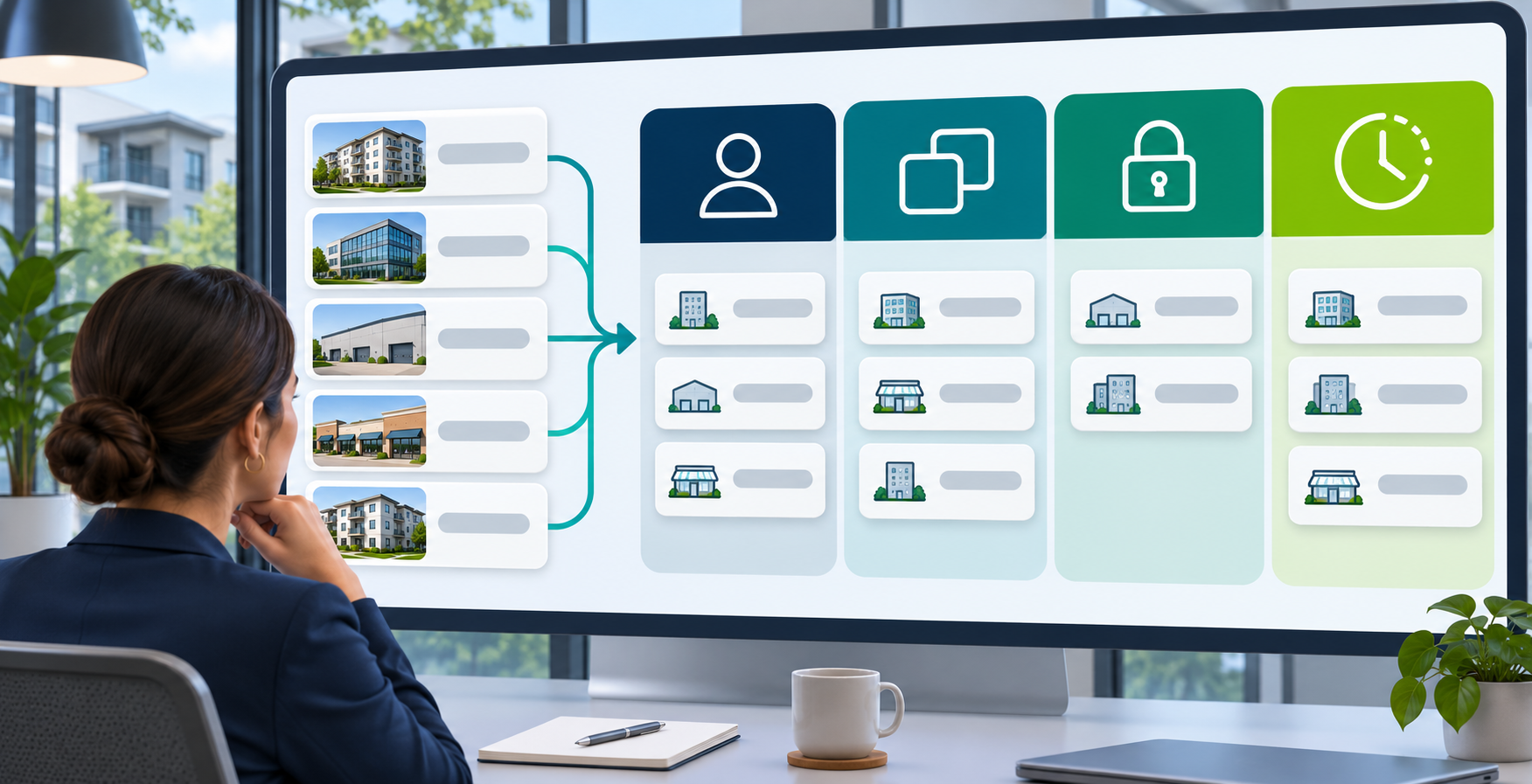
Routing rules should combine location, service type, priority, working hours, contract coverage, and staff or vendor capability. Site alone is rarely enough. A lift fault, cleaning complaint, aircond leak, access-control issue, and planned inspection may all need different owners at the same building.
The facility and property-management workflow should also expose exceptions: unassigned requests, missing location details, items nearing a target, duplicate reports, and requests waiting on tenant access or approval.
Do not hide duplicate reports
Several tenants may report the same outage. The system should preserve each communication while linking the reports to one operational issue where appropriate. This lets the team coordinate one repair without losing the list of people who need updates.
Likewise, a repeat complaint should be linked to earlier work and the relevant asset history. The team can then review prior findings instead of treating every message as a new event.
Questions to ask when choosing request-intake software
- Can it retain the original conversation and attachments?
- Can required fields vary by issue type?
- Can requests be routed by site, priority, service, and contract?
- Can a coordinator create a work order without re-entering the request?
- Can duplicate reports be linked while every reporter still receives updates?
- Can blocked, overdue, and unassigned items be reported clearly?
- Can closure evidence and follow-up work remain connected to the request?
Facility management connects people, place, and process in the built environment, as described by IFMA. A useful intake design reflects that relationship: it captures who needs help, where the issue exists, and which process must happen next.
Map one real request before changing the whole portfolio
Start with a common scenario such as an aircond leak, cleaning complaint, or access issue. Map the journey from first message through triage, assignment, field proof, tenant update, and verified closure. Then define the minimum data and exception rules needed at each step.
Explore NinjaSuites request management to plan a structured tenant-intake queue. You can also review NinjaSuites plans for your operating model.