


Short answer: reinspection management software should help facility and property teams confirm that corrective work was completed properly, not just marked done. If failed inspection items are closed without a reliable reinspection step, teams may report completion while the real operational risk remains.
That matters because many maintenance and compliance workflows do not break at the inspection stage. They break after the fix is supposedly complete. A failed checklist item, defect, or audit finding may be assigned quickly, but unless someone verifies the outcome, repeat issues remain likely.
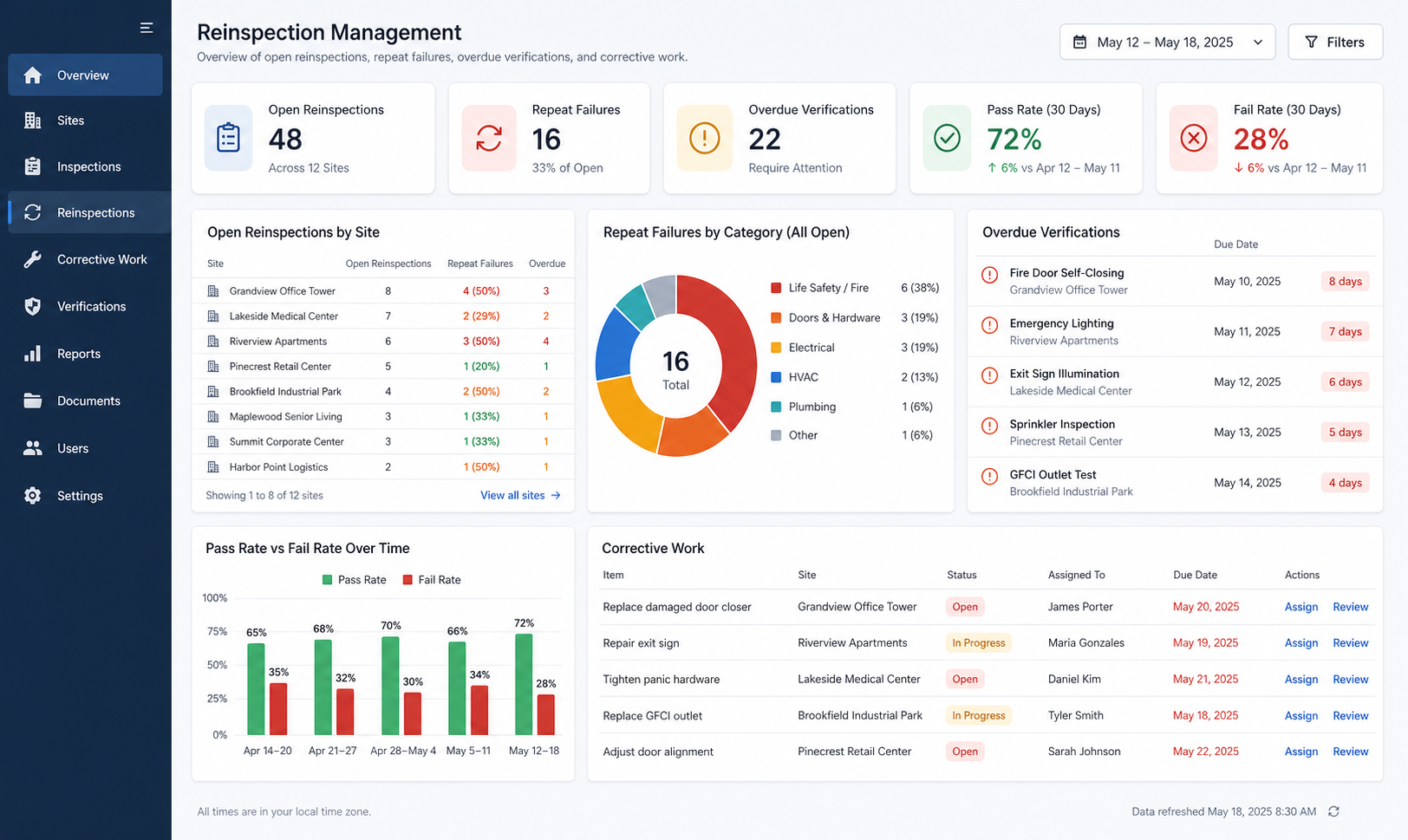
What good reinspection management software should do
- link the original defect, corrective action, and reinspection result in one record
- show which items need verification before final closure
- preserve photos, comments, timestamps, and pass or fail status
- highlight repeat failures and overdue reinspections across sites
- support reporting for managers who need proof of follow-through
For many operators, this works best when it connects to inspection checklists, inspection-linked work orders, work order execution, and maintenance reporting.
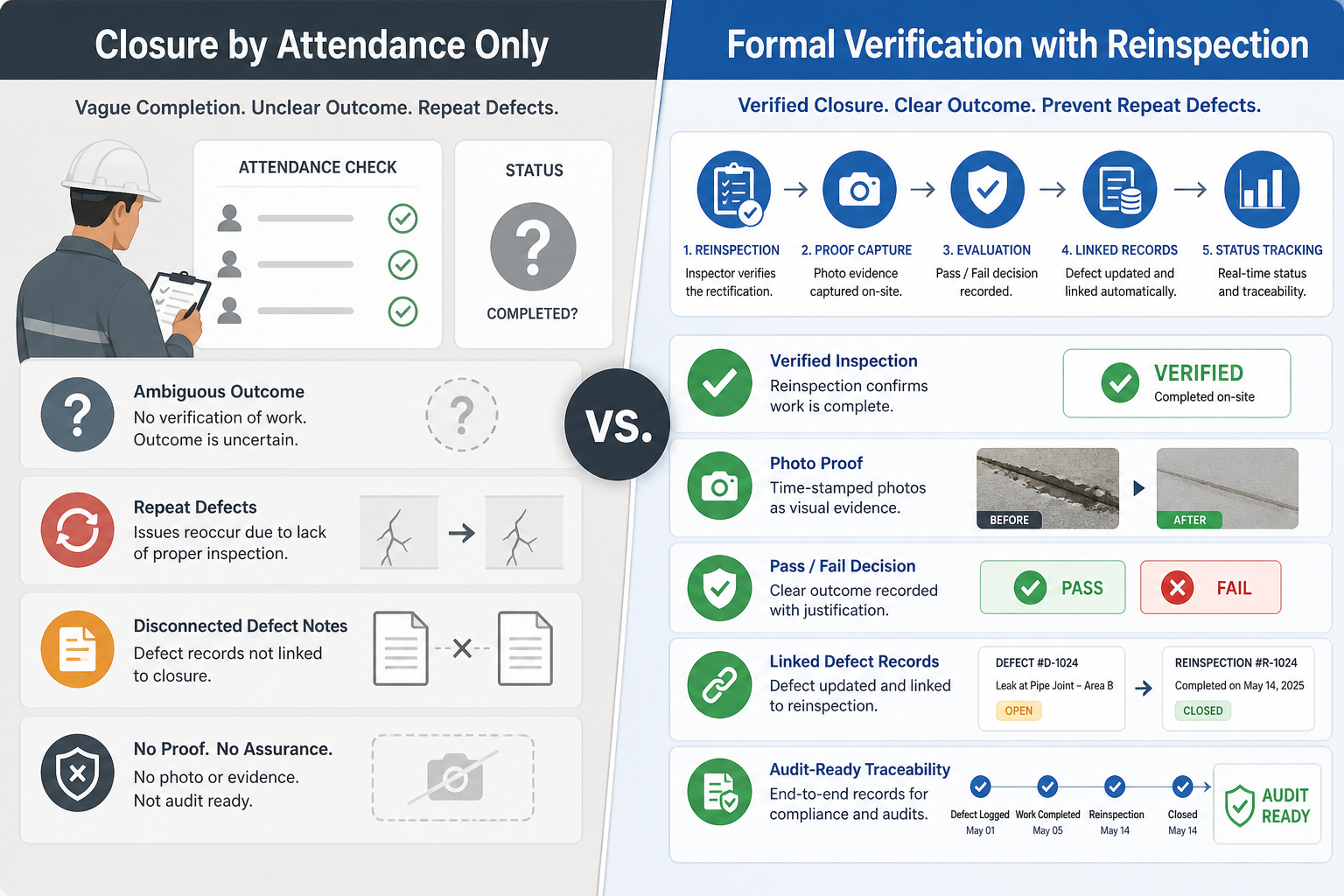
Why reinspection gets missed
1. Closure is based on attendance, not outcome
A technician visit is often treated as the end of the issue. But attendance only proves someone showed up. It does not prove the finding was resolved to the required standard.
2. Inspection and corrective work live in separate systems
When the defect is logged in one place and the fix is tracked in another, teams lose the thread between the original finding and the final verification step.
3. Managers cannot see what still needs validation
Some items need a simple visual check. Others need a technical re-test, supervisor sign-off, or client confirmation. If those requirements are not visible, teams will close too early.
4. Repeat failures are not being learned from
If a defect fails again after closure, that is valuable operational feedback. Reinspection software should make those patterns visible.
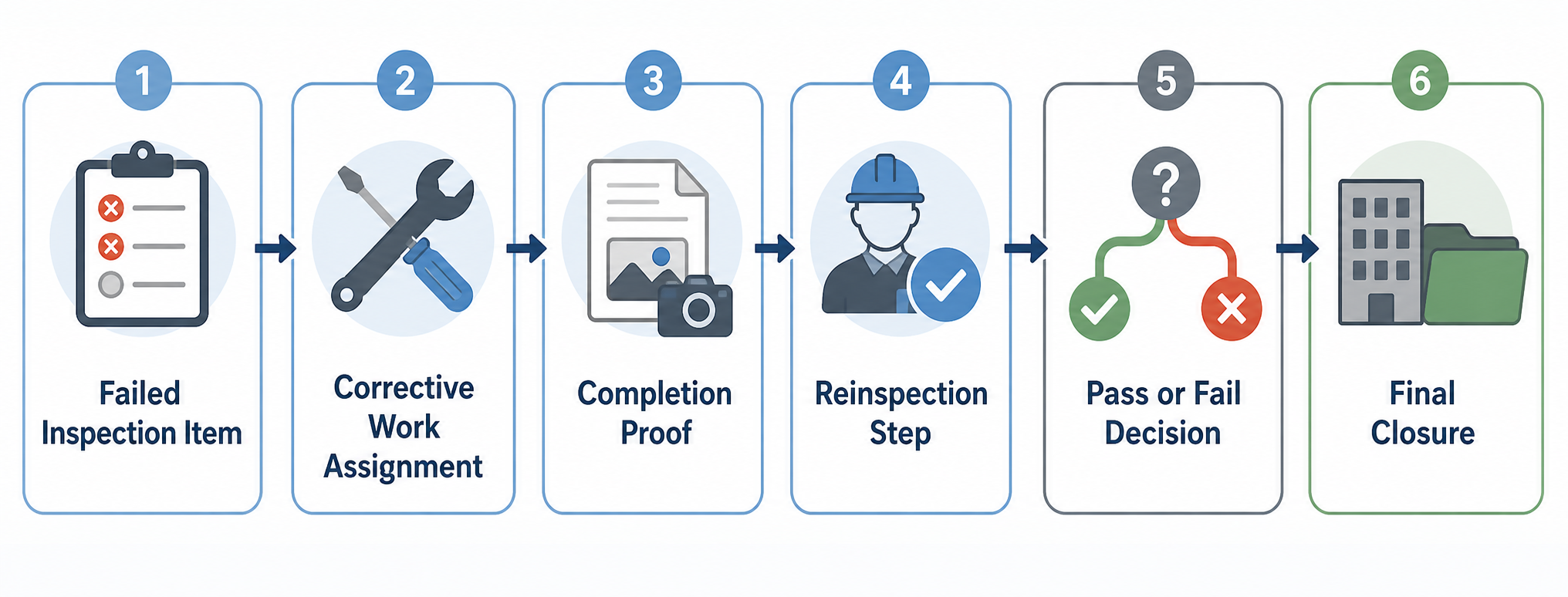
A simple reinspection workflow operators can use
- Log the original finding clearly. Capture the defect, location, severity, and evidence.
- Create corrective work with verification rules. Not every defect needs the same reinspection path, so define the required check up front.
- Collect completion proof. Technicians should submit work notes, photos, and timestamps before the item moves to verification.
- Assign reinspection ownership. Make it clear who performs the check: supervisor, inspector, client representative, or another technician.
- Record pass or fail. A failed reinspection should reopen or extend the workflow, not disappear into comments.
OSHA’s facility safety standards at 29 CFR 1910 are a reminder that documented follow-through matters when teams are addressing physical conditions and workplace risks. Better Buildings guidance on operations and maintenance also supports structured verification and maintenance discipline across facilities.
What buyers should evaluate
- Can the system connect the inspection finding, corrective work, and reinspection result?
- Can teams define which issues require reinspection before closure?
- Can managers report on overdue verification, repeat failures, and closure quality?
- Is the workflow practical for field users, inspectors, and supervisors alike?
- Can the same platform also support the intake side through request management when defects originate from service complaints or tenant reports?
Where NinjaSuites fits
NinjaSuites is relevant for teams that do not want inspections and corrective work managed as disconnected processes. When the original finding, work order, proof of completion, and verification step stay connected, managers get a clearer picture of closure quality instead of just closure volume.
That is especially valuable for portfolios that need stronger audit confidence, repeat-defect control, or cleaner communication with clients and site stakeholders.
Next step
If your current process marks issues done before they are truly verified, book a NinjaSuites demo to see how reinspection workflows can stay connected from defect to closure. You can also review NinjaSuites inspection-linked work order workflows for a more specific implementation angle.