

Short answer: tenant request management software should help property teams receive maintenance and service requests through familiar channels, classify them correctly, assign clear ownership, and track progress through completion. If your team still depends on inboxes, chat threads, and manual follow-up to figure out who is doing what, the request process is still too fragile.
That matters because tenant communication is where property operations often start to feel either professional or chaotic. Residents, tenants, site staff, and landlords do not judge the process by your internal intentions. They judge it by whether requests are acknowledged quickly, routed to the right person, and closed with visible follow-through.
What tenant request management software should actually solve
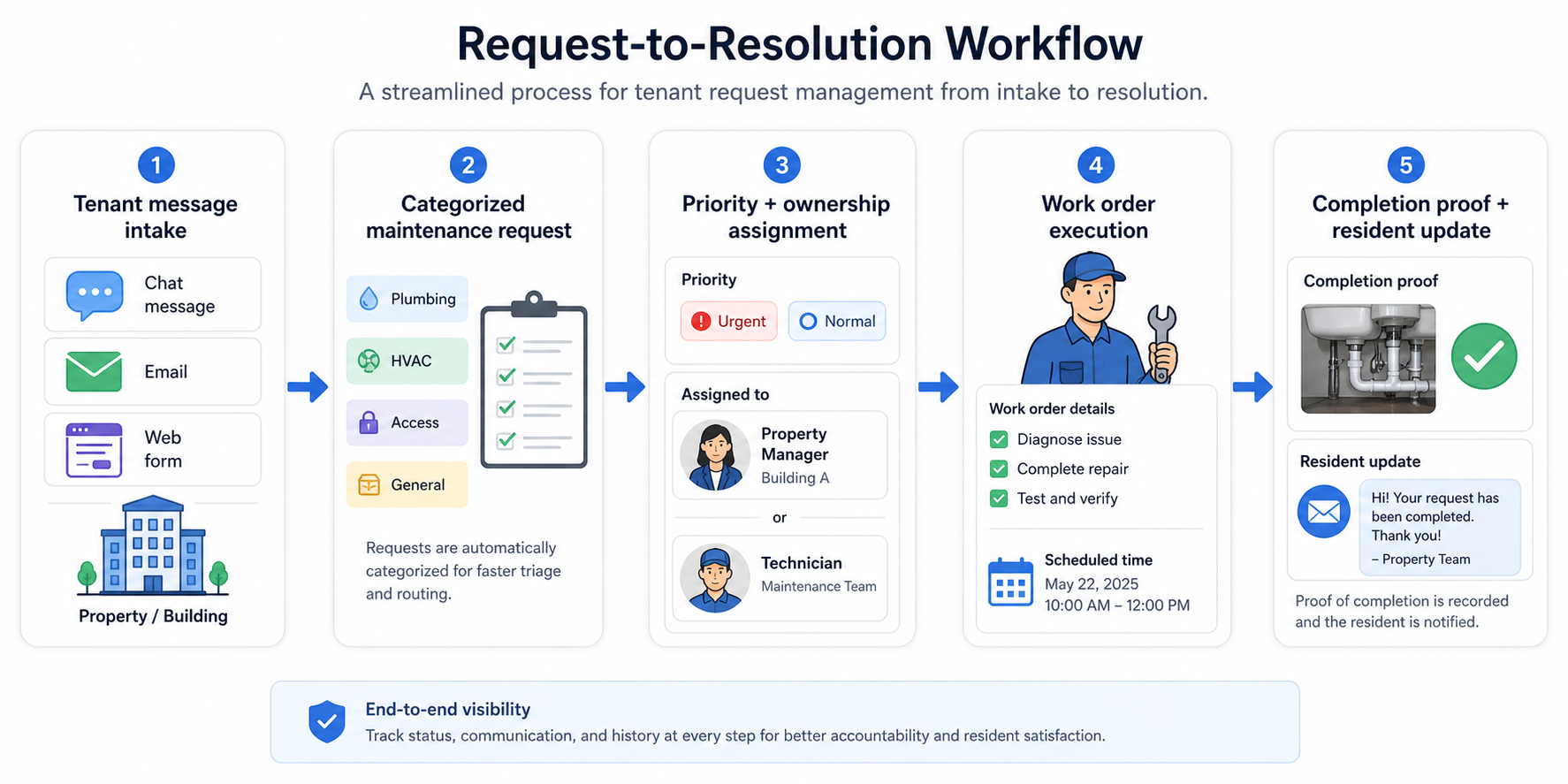
Most property teams do not need another form builder. They need an operating layer that turns incoming messages into accountable work. In practice, strong software should help you:
- capture requests from chat, forms, email, or staff submissions in one queue
- separate urgent issues from routine tasks using consistent categories and priorities
- assign work to the right in-house team, technician, or vendor with due dates
- keep one visible request history with notes, photos, and completion proof
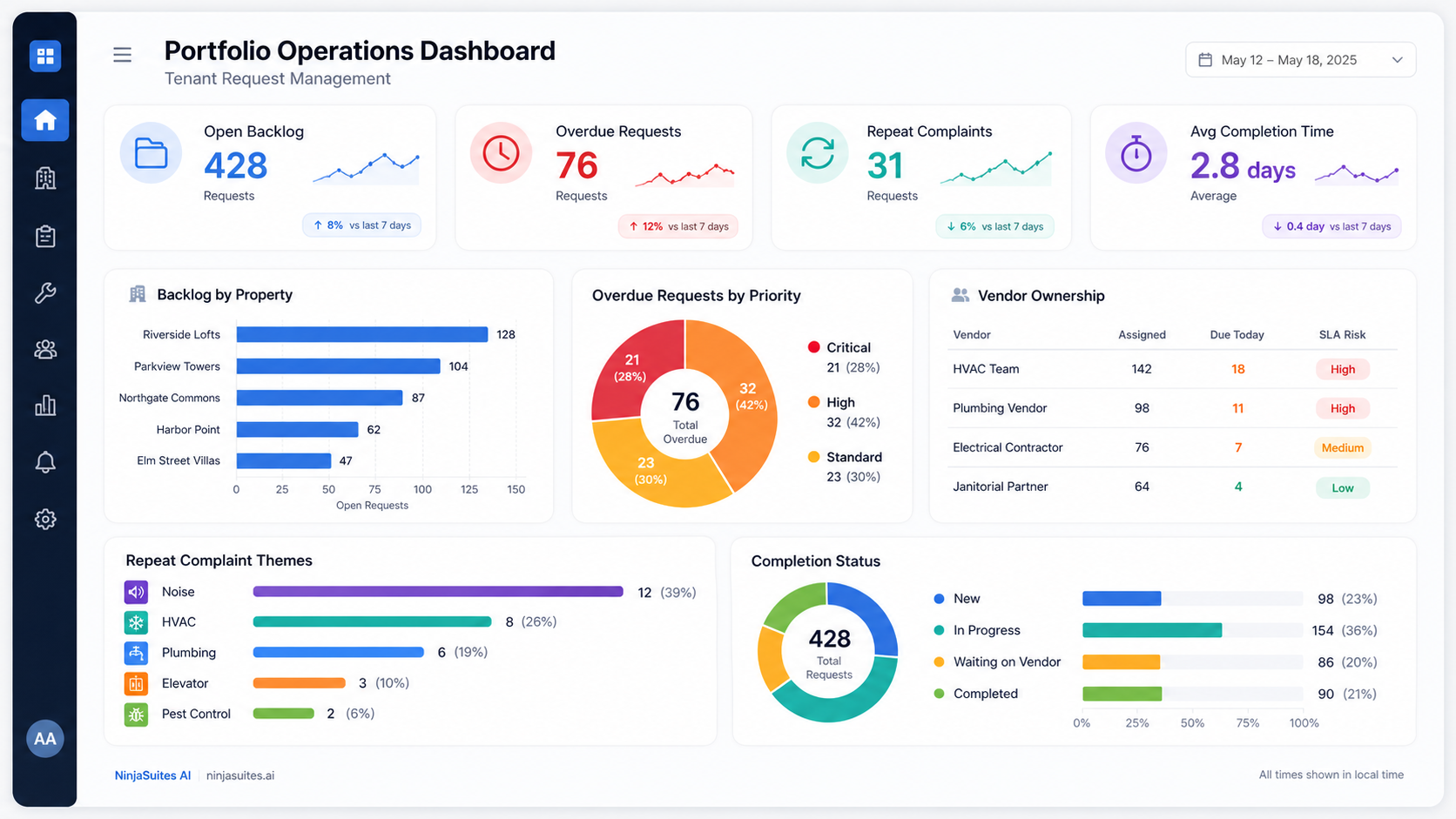
- report on backlog, repeat issues, SLA risk, and site-level patterns
That is why request intake works best when it connects directly to request management, work order management, property operations workflows, and reporting instead of living in separate tools.
Where most property teams lose control
1) Requests arrive everywhere
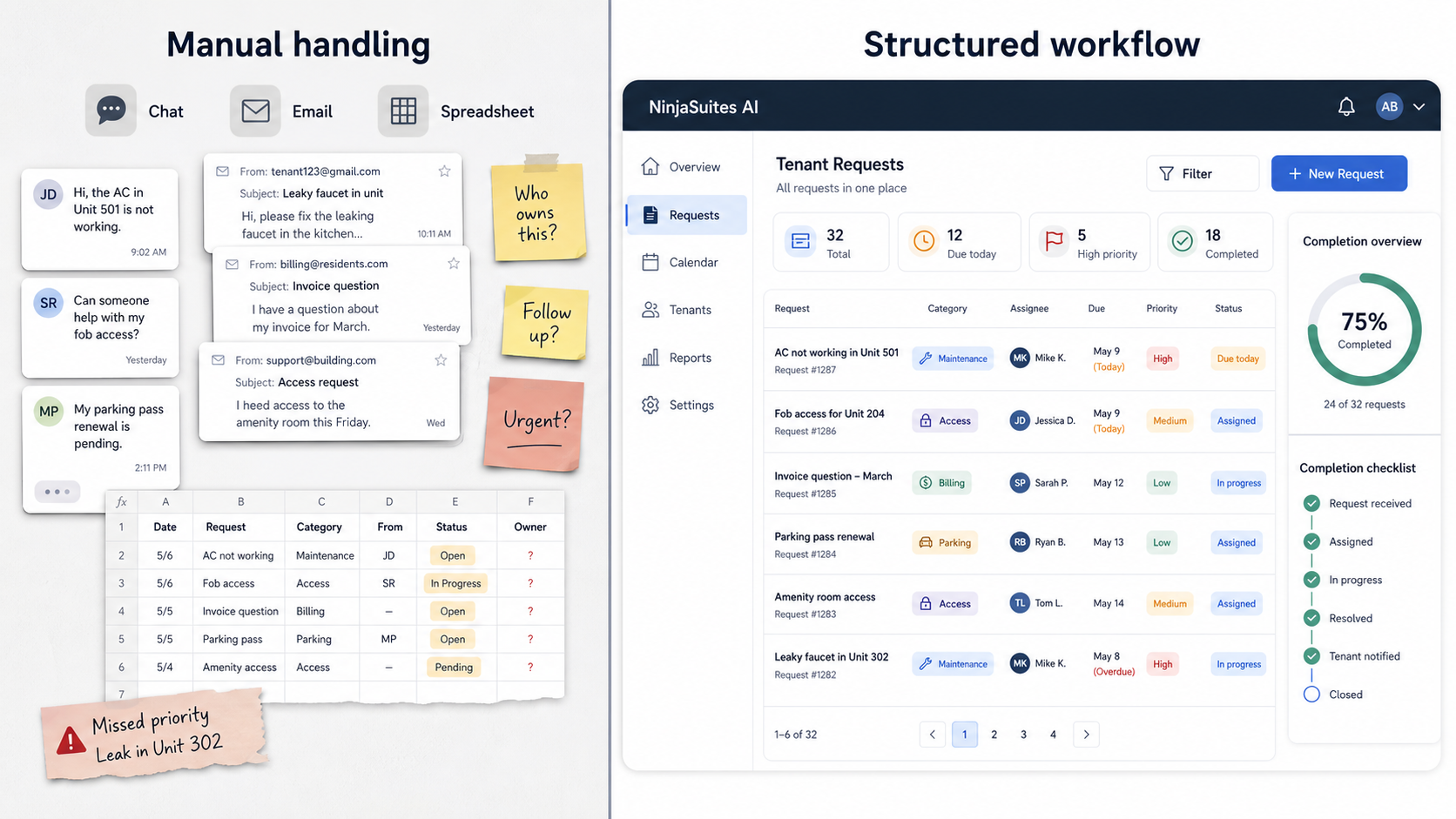
Many portfolios already have a channel problem before they have a software problem. Tenants send complaints through WhatsApp, leasing staff forward emails, guards call in urgent issues, and site supervisors log defects later from memory. Without one intake layer, the team is forced to reconstruct the service record after the fact.
2) Priority is inconsistent
A water leak, failed aircond unit, broken door closer, and corridor light outage should not be handled the same way. Good request software should help teams classify urgency, route by issue type, and apply response expectations consistently. That is especially important when the same operations team covers reactive maintenance, vendor coordination, and routine property issues.
3) Visibility disappears after handoff
Some teams are fast at acknowledging a request but weak at tracking what happened next. The moment the request leaves the inbox or chat thread, managers lose visibility. Better software keeps the full flow visible from intake to assignment to completion, with updates that both coordinators and site managers can trust.
4) Repeat complaints are hard to spot
If tenant history, unit history, and service history are disconnected, recurring issues look like isolated events. That leads to repeated temporary fixes instead of identifying the real maintenance pattern. A connected system makes repeat requests easier to spot across the same unit, asset, vendor, or building.
A better request-to-resolution workflow
A practical workflow for property teams looks like this:
- a request enters through a familiar channel or a structured portal
- the issue is categorized by site, unit, asset, urgency, and service type
- ownership is assigned to the right internal team or vendor
- the request becomes a trackable work order with due dates and status changes
- photos, notes, and completion proof are stored in the same record
- managers review backlog, escalations, and repeat issues from one dashboard
That is the kind of operating model NinjaSuites supports for teams comparing omnichannel intake with manual coordination and wanting cleaner follow-through into property maintenance execution.
What buyers should ask before choosing a platform
- Can the same system capture tenant requests and turn them into structured work orders?
- Can coordinators route issues by property, service type, urgency, and vendor responsibility?
- Can managers see overdue requests, repeat complaints, and unresolved backlogs clearly?
- Can the team keep one service record with photos, notes, and completion proof?
- Will the workflow still work for cleaning, aircond, maintenance, inspection, and common-area requests?
Why this is commercially relevant for NinjaSuites
NinjaSuites is a strong fit for property teams that need more than a ticket inbox. It supports request intake, assignment, work tracking, proof of completion, and operational reporting in one environment. That is useful for portfolios where tenants want fast responses but managers also need clean records, repeat-issue visibility, and better control over vendors and internal teams.
If your team is still losing requests between chat, email, and spreadsheets, book a NinjaSuites demo and map your intake process against a more controlled request-to-work-order workflow. Buyers who want to compare commercial options can also review pricing and related guidance such as maintenance SLA tracking.
FAQ
What is tenant request management software?
It is software that helps property teams capture incoming requests, route them to the right people, track progress, and keep a usable service record through completion.
Why is request intake such a big operational issue?
Because when requests arrive through disconnected channels, teams lose information, misjudge urgency, and struggle to prove what happened after the handoff.
Should tenant requests connect directly to work orders?
Yes. That connection reduces duplicate entry and makes it easier to track ownership, due dates, completion proof, and repeat issues in one place.