

Short answer: cleaning job scheduling software should help commercial cleaning teams plan recurring work, handle last-minute requests, assign the right crew, and verify completion without supervisors spending the whole day chasing updates. If the schedule still lives in spreadsheets, chat groups, and memory, missed tasks and unclear accountability will keep coming back.
That is the core buyer problem. Cleaning operations are not difficult because teams lack calendars. They become difficult because recurring tasks, shift changes, site access issues, urgent complaints, and quality checks all collide in the same day. Scheduling software only matters if it helps operators coordinate that reality with less friction.
What cleaning job scheduling software should really improve
The best platforms do more than drop jobs onto a timetable. They help cleaning supervisors and coordinators:
- schedule recurring cleaning tasks by site, shift, zone, and service type
- assign crews based on route, workload, access windows, and responsibility
- capture ad hoc requests without breaking the rest of the day
- track attendance, status updates, proof of service, and missed-task follow-up
- review site performance, repeat issues, and quality trends from one place
That is why a strong cleaning workflow usually connects work order management, request intake, reporting, and multi-site property operations instead of treating scheduling as a standalone roster.
Why missed tasks keep happening
1) Recurring work is planned, but not actively monitored
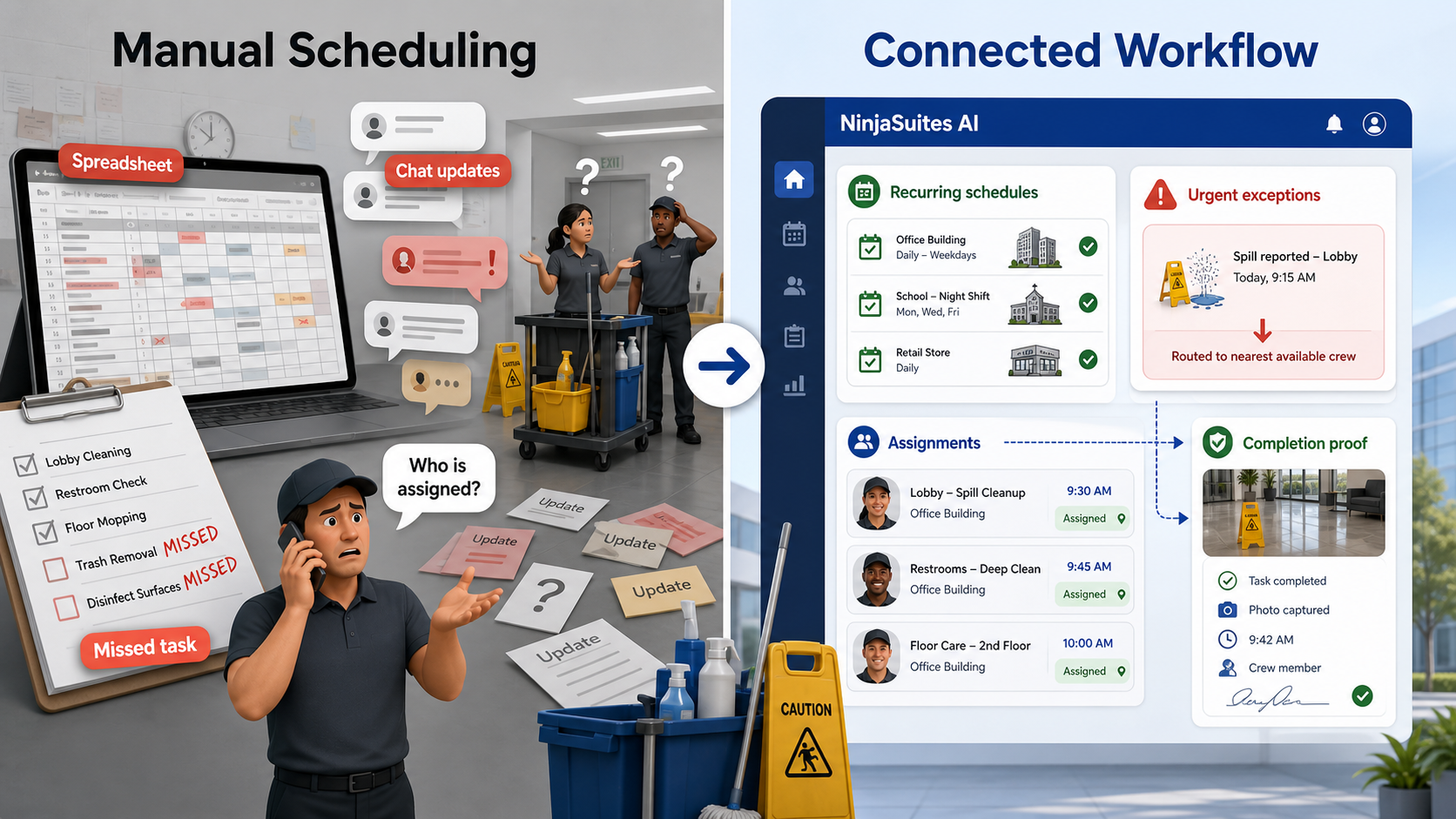
Many cleaning teams can build a recurring schedule on paper. The harder part is seeing what slipped, what was reassigned, and what was not verified. Software should help managers see planned work, in-progress work, and unconfirmed completion in one view.
2) Ad hoc complaints break the schedule
Spills, restroom issues, event support, and missed-area complaints can disrupt a well-planned route. Good software should make it easy to inject urgent tasks into the day while keeping the rest of the schedule visible. Otherwise coordinators end up managing exceptions through phone calls and chat.
3) Crew handoffs are not clear
Cleaning operations often involve split shifts, shared areas, and rotating crews. If job ownership is vague, one team assumes the other handled it. A useful system should show who owns each task, what proof is required, and whether a follow-up inspection is still open.
4) Proof of service is inconsistent
Customers and supervisors often want more than verbal confirmation. They need timestamps, checklists, notes, photos, and issue escalation when standards are not met. Scheduling software becomes much more valuable when it supports quality confirmation and follow-up actions, not just time slots.
A better operating model for commercial cleaning teams
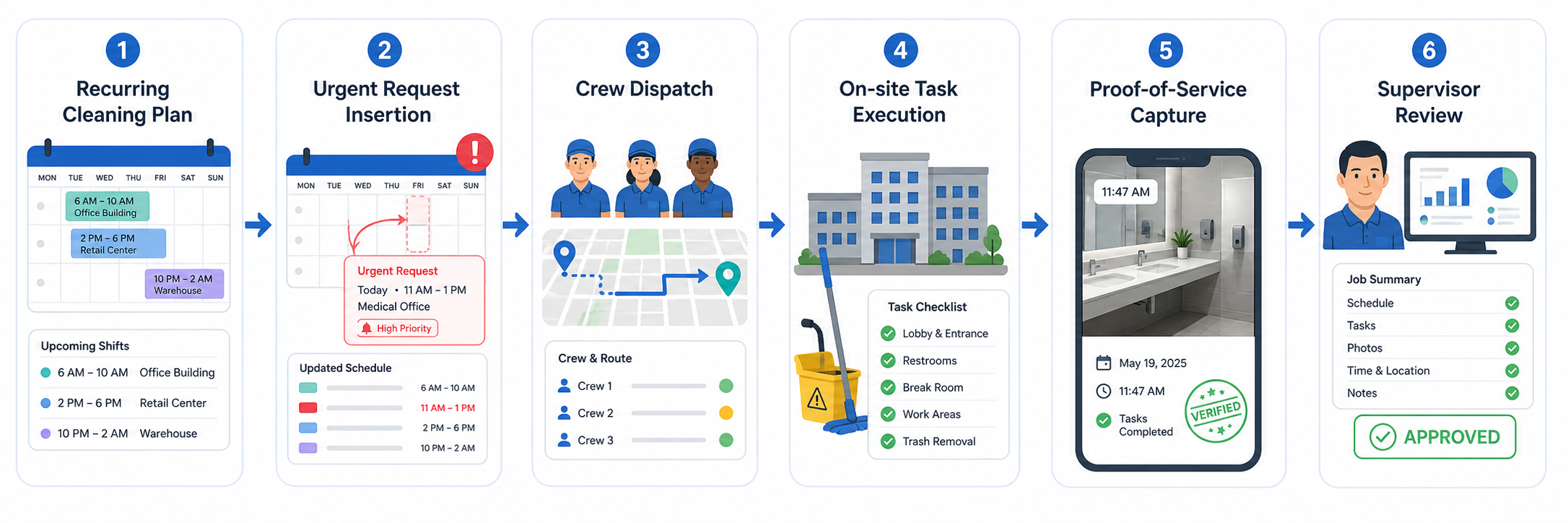
A stronger workflow looks like this:
- recurring tasks are scheduled by site, frequency, and scope
- urgent cleaning requests enter through the same intake system instead of separate chats
- supervisors assign work to the right crew with clear timing and location context
- staff update progress on site and capture proof of completed work
- quality issues become follow-up tasks instead of forgotten side notes
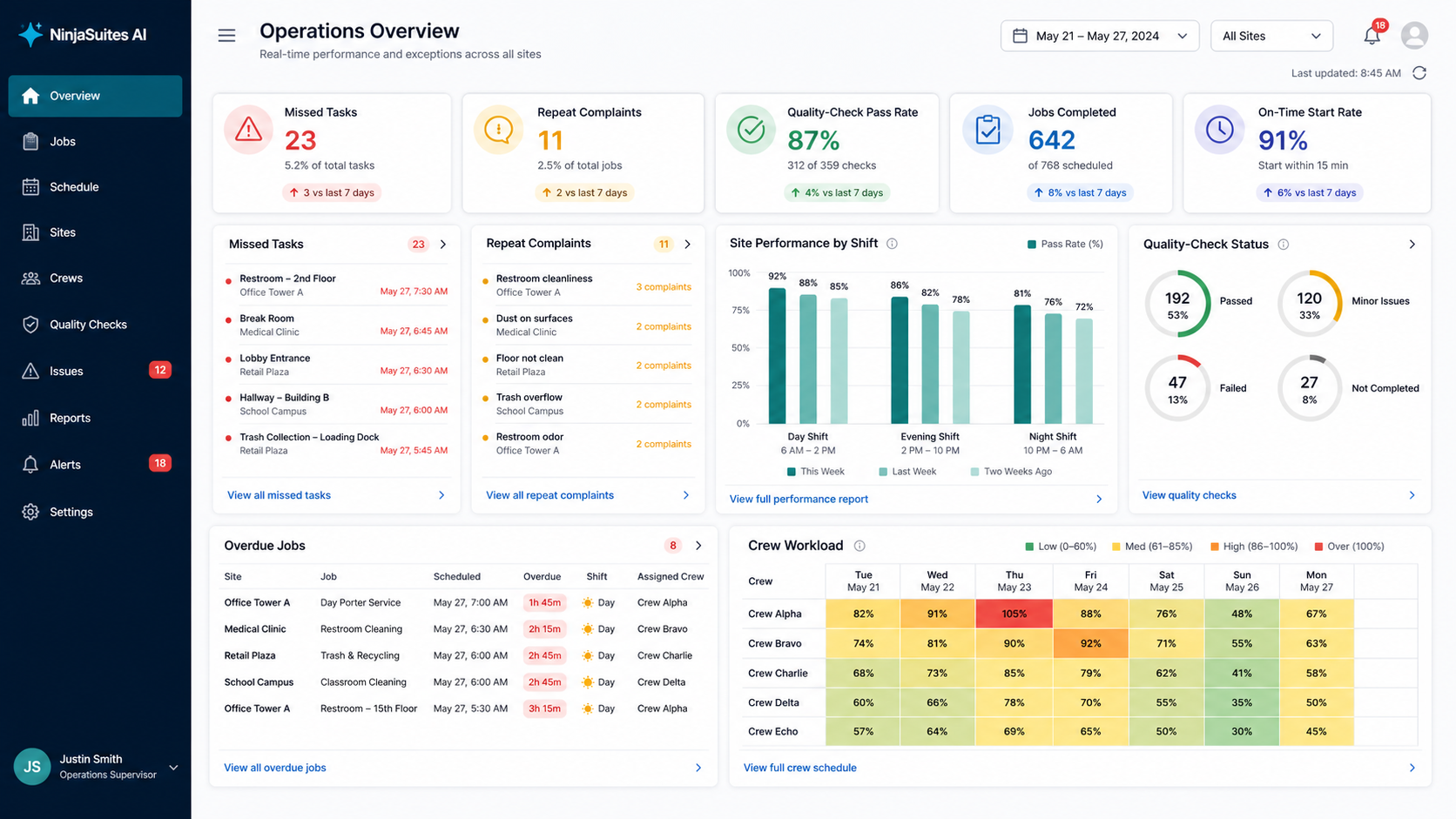
- managers review missed tasks, repeat complaints, and crew performance in one dashboard
That fits the kind of connected workflow NinjaSuites can support for operators managing cleaning alongside broader service operations such as maintenance requests, inspections, and property coordination.
What buyers should ask vendors
- Can the software handle both recurring cleaning schedules and reactive service requests?
- Can supervisors see what is scheduled, completed, overdue, or unverified by site and shift?
- Can teams capture checklists, photos, and proof of service without extra admin?
- Can missed tasks, complaints, and defects become trackable follow-up work?
- Can the same system support cleaning, maintenance, and property-service coordination if the operation expands?
Why this matters commercially for NinjaSuites
NinjaSuites is a strong fit for cleaning operators who need more than a scheduling board. It supports request intake, assignment, field updates, proof of service, and reporting in one operational flow. That makes it useful for commercial cleaning teams serving offices, shared facilities, mixed-use properties, and other multi-site environments where recurring work and reactive issues have to coexist.
If supervisors are still chasing cleaners through calls and chat to confirm what was done, book a NinjaSuites demo and map how your cleaning routes, urgent requests, and quality checks could run from one workflow. Buyers evaluating rollout options can also review pricing and related service-operation content such as service reporting.
FAQ
What is cleaning job scheduling software?
It is software that helps commercial cleaning teams plan recurring work, assign crews, handle urgent requests, and track completion across sites and shifts.
Why do missed tasks happen even with a recurring cleaning schedule?
Because recurring plans often break down when urgent requests, unclear handoffs, and weak completion proof are managed outside the scheduling system.
Should cleaning scheduling connect to request tracking and reporting?
Yes. That connection helps supervisors manage exceptions, verify service quality, and spot repeat issues without rebuilding the day from scattered updates.