

Short answer: cleaning complaint management software should help commercial cleaning operators capture issues consistently, assign corrective action fast, and show whether the complaint was actually resolved. If complaints still arrive through WhatsApp, voice notes, email, and paper checklists with no shared workflow, service recovery will stay harder than it needs to be.
That matters because complaints are rarely just communication problems. They usually expose deeper operational gaps: missed tasks, unclear site ownership, poor follow-up, weak inspection routines, or no visibility into repeat issues. The right software gives managers a cleaner way to respond before one complaint becomes a contract risk.
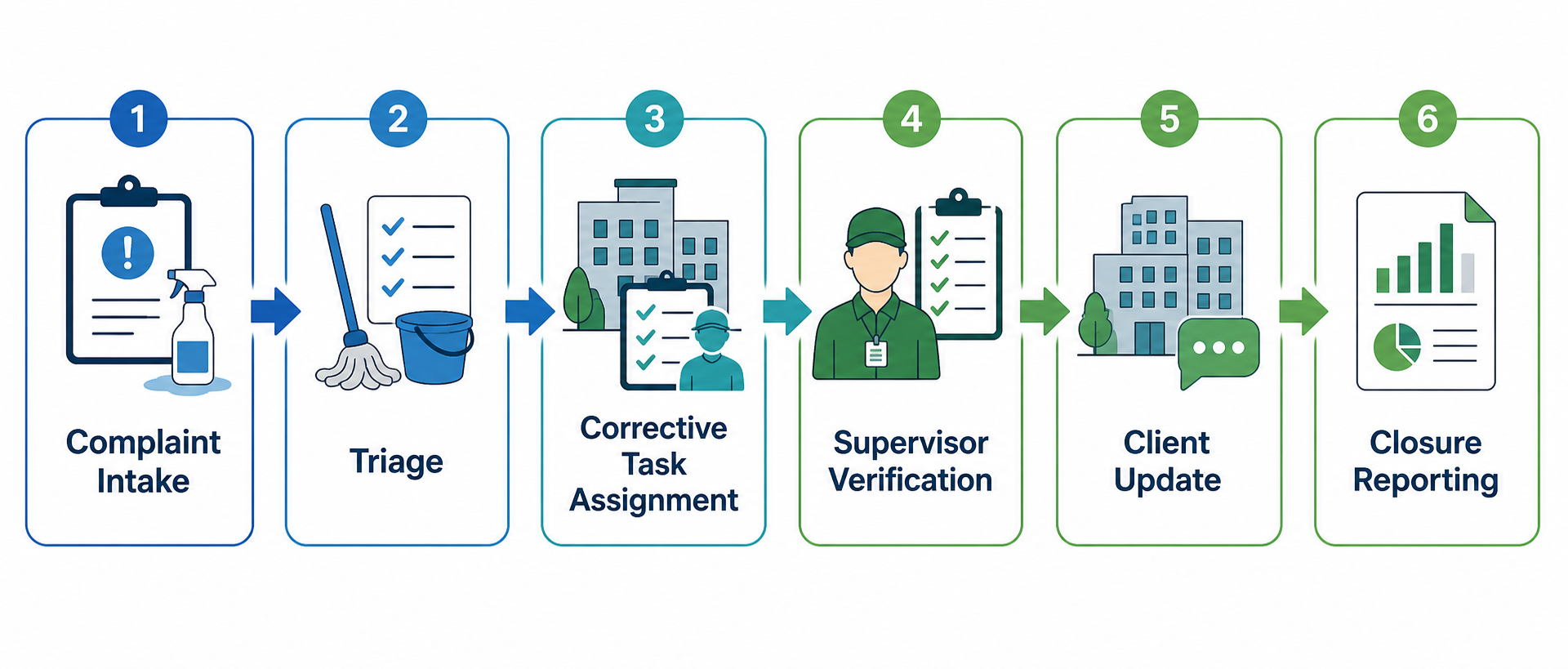
What good cleaning complaint management software should do
- capture complaints with site, location, category, severity, and photo evidence
- assign follow-up work to the right supervisor, cleaner, or support team
- show response timers, SLA risk, and current ownership clearly
- connect complaint recovery to inspections and corrective action records
- report on repeat complaint trends by site, client, or service type
For commercial cleaning businesses, this works best when it connects to SLA tracking, request intake, inspection-linked corrective work, and client reporting.
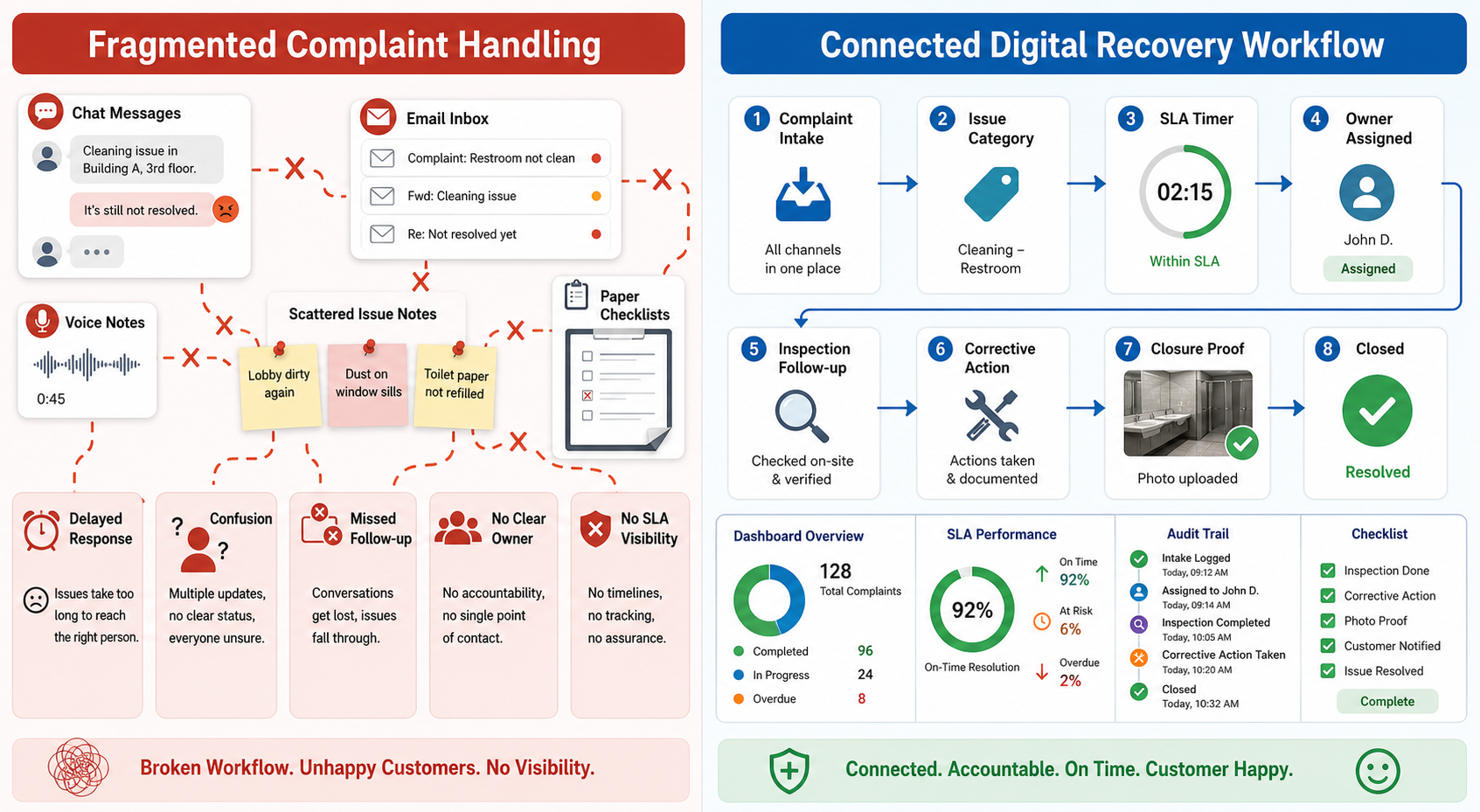
Why complaint handling often feels chaotic
1. Intake is inconsistent
One client sends an email, another messages a supervisor, another logs issues in a site book. Teams then spend time translating all of that into a workable task list.
2. Recovery ownership is vague
A complaint may need immediate site action, supervisor inspection, or client communication. When the current owner is not obvious, recovery slows down.
3. Closure is recorded without proof
It is common for a complaint to be marked resolved after a verbal confirmation or a single follow-up message. But for contract protection, teams often need photos, inspection evidence, or supervisor verification.
4. Repeat issues are hidden
If managers cannot see which sites, shifts, or task types generate repeat complaints, the business stays stuck in reactive mode.
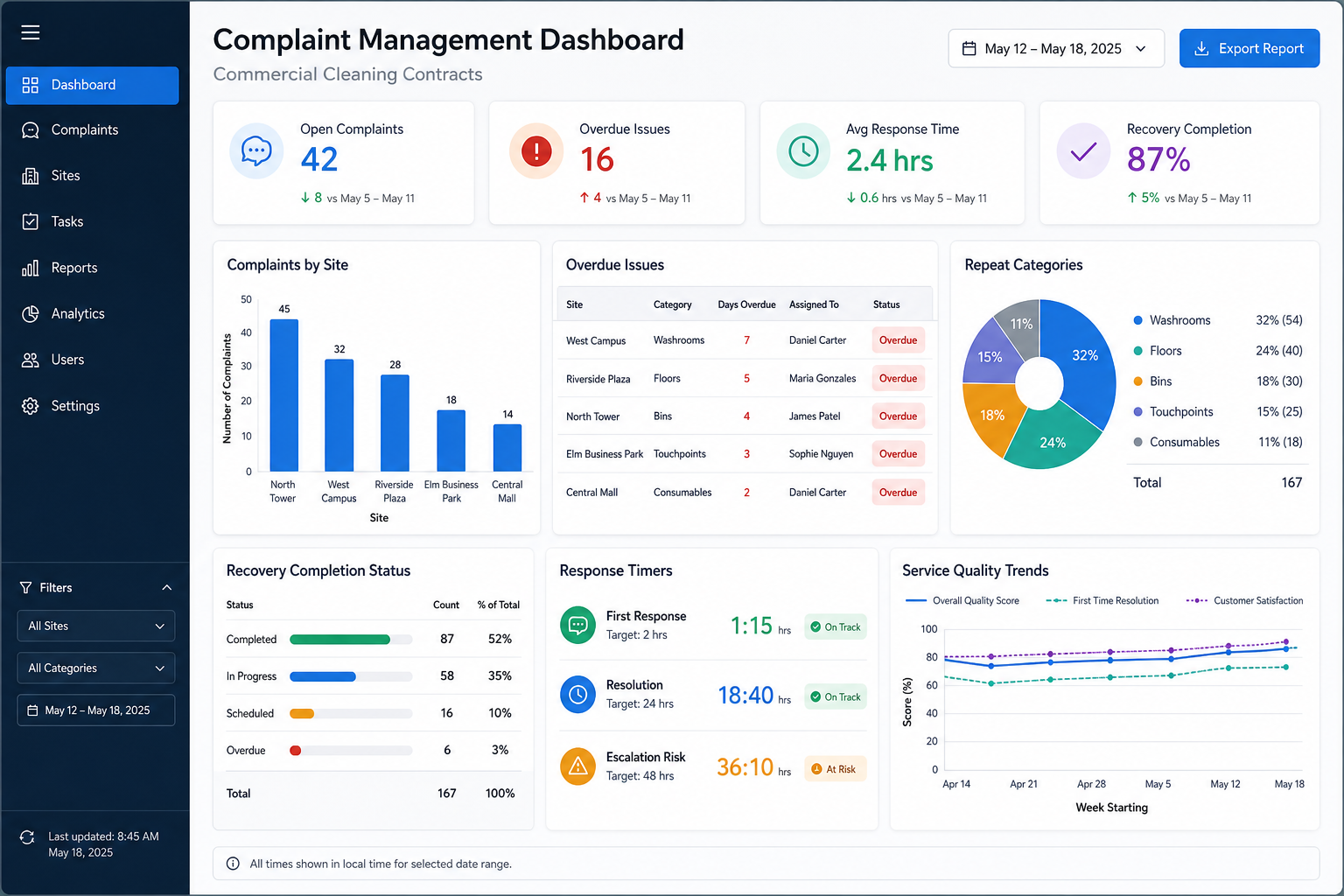
A practical complaint recovery workflow
- Capture the issue clearly. Record where the issue happened, what was missed, how urgent it is, and any supporting images.
- Route the response fast. The workflow should assign the correct supervisor or site team immediately.
- Link corrective action to verification. A resolved complaint should show what was done and who confirmed the result.
- Track recovery time. Teams need visibility into which complaints are close to missing response commitments.
- Review repeat patterns. Use complaint data to identify training gaps, staffing issues, and weak inspection routines.
IBM’s overview of service-level agreements is a useful reference when designing response expectations and follow-up discipline. OSHA’s page on janitorial services is also a useful operational reminder that cleaning environments can involve real health and safety considerations, which makes documented follow-through more important.
What buyers should look for
- Can the system handle complaint intake from multiple channels without losing structure?
- Can site teams and supervisors see current ownership instantly?
- Can the workflow connect complaints to inspections and corrective work records?
- Can managers report on repeat issues, overdue complaints, and closure quality by contract?
- Can the same platform support broader service delivery control, not just complaint logging?
For operators that already rely on site inspections, linking complaint recovery back to inspection routines can make service recovery more consistent instead of purely reactive.
Where NinjaSuites fits
NinjaSuites is relevant for commercial cleaning businesses that need complaint management treated as an operational workflow rather than a disconnected register. When complaint intake, corrective work, inspections, and reporting stay connected, managers can recover faster and explain performance more clearly to clients.
That is especially valuable for contract environments where response quality, evidence of recovery, and repeat-issue control directly influence retention.
Next step
If your cleaning complaint process still depends on scattered messages and manual follow-up, book a NinjaSuites demo to see how a connected workflow can improve service recovery. You can also explore NinjaSuites SLA tracking workflows for the response-timer angle.