

Short answer: maintenance request tracking software should help building managers capture incoming issues in one queue, assign responsibility quickly, track progress clearly, and keep a usable service record through completion. If requests still disappear between phone calls, WhatsApp, email, and handwritten notes, the process is too dependent on memory.
That matters because building managers sit at the point where service expectations become operational pressure. They need to answer residents, tenants, site staff, and ownership while coordinating maintenance, cleaning, inspections, and vendor work. Tracking software matters when it reduces chasing, uncertainty, and duplicate follow-up.
What maintenance request tracking software should actually do
Strong request tracking software should help building managers:
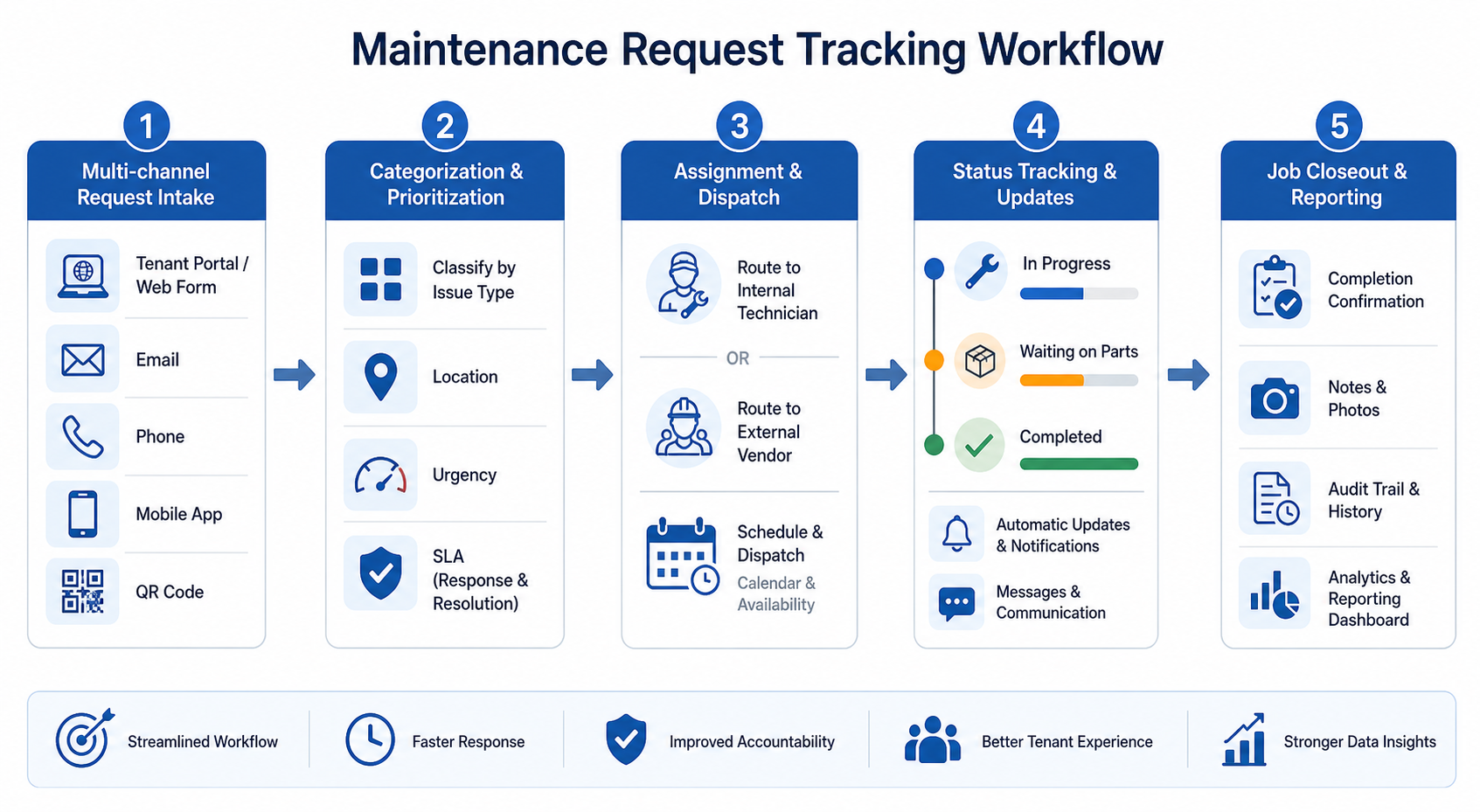
- capture requests from tenants, reception, site staff, inspections, or chat channels in one intake flow
- classify issues by urgency, location, asset, trade, and service type
- assign the right internal team or vendor with due dates and visible ownership
- track notes, photos, status changes, waiting reasons, and completion proof in one record
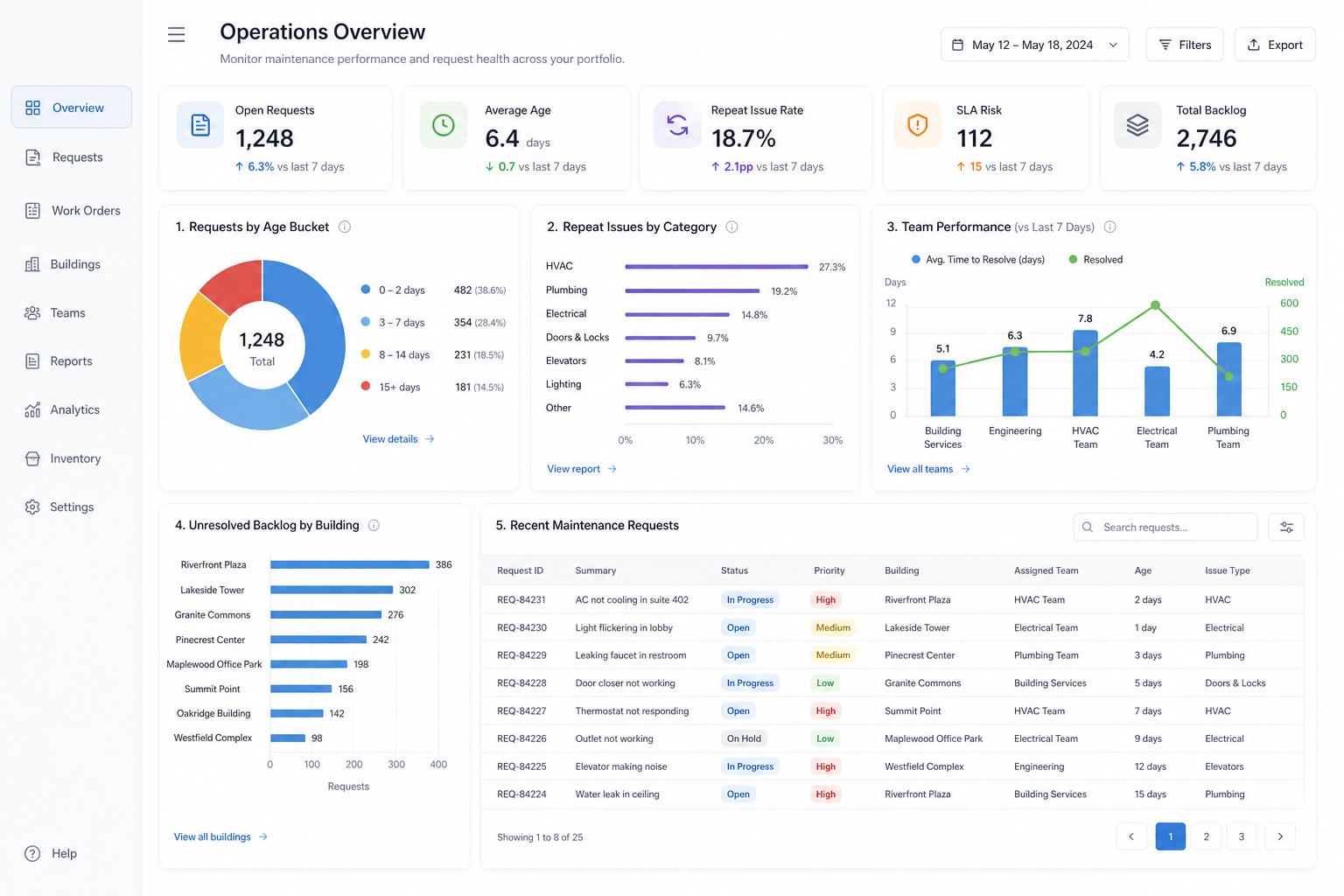
- report on unresolved issues, repeat requests, aging jobs, and building-level service patterns
That is why good request tracking usually combines request management, work order execution, reporting, and property operations visibility rather than relying on disconnected communication tools.
Why building managers lose control of requests
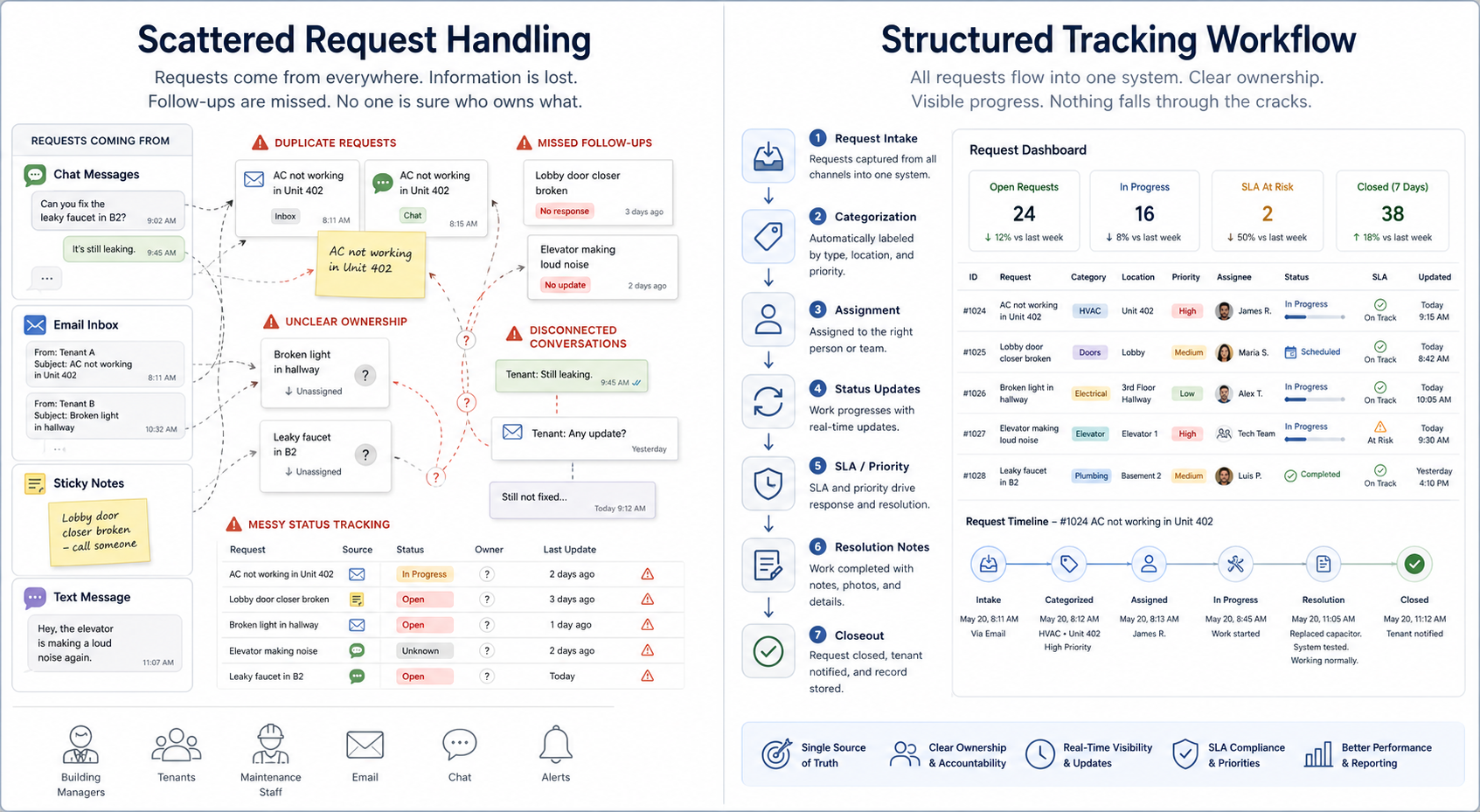
1) The intake process is fragmented
When requests arrive through too many channels, managers end up acting as a human integration layer. They forward messages, rewrite details, chase photos, and clarify urgency instead of moving directly into service coordination.
2) Ownership is unclear after handoff
One of the biggest frustrations in building operations is not knowing who currently owns the issue. Good software should make that visible for managers, service coordinators, and vendors without requiring more status-chasing.
3) Updates are hard to trust
If completion is reported informally or without supporting notes and proof, managers still have to verify whether the work really solved the problem. That slows closeout and creates more tenant follow-up.
4) Repeat issues stay hidden
Without request history by unit, location, asset, or vendor, recurring problems look unrelated. Better tracking software helps building managers identify patterns before they become a larger occupancy or service issue.
A better request-tracking workflow for building managers
- capture every incoming issue in one queue regardless of source channel
- tag each request by building, unit, issue type, urgency, and responsible team
- turn the request into a trackable work record with due dates and status visibility
- store updates, photos, notes, and waiting reasons in the same record
- review aging, repeat issues, and unresolved backlogs from one dashboard
- use the reporting layer to improve routing, escalation, and service standards
That workflow is commercially relevant for NinjaSuites because many building managers need software that does not just log requests. They need a practical operating layer that helps them close the loop with less chasing.
What buyers should ask before choosing the platform
- Can the platform capture requests from multiple channels without losing detail?
- Can managers see exactly who owns each issue and what is blocking it?
- Can recurring requests be tracked by location, vendor, asset, or tenant history?
- Can request records become work orders without duplicate data entry?
- Can the workflow support maintenance, cleaning, aircond, and inspection-related issues in one system?
Why this is commercially relevant for NinjaSuites
NinjaSuites is a strong fit for building managers who need request intake, assignment, follow-through, and reporting to stay connected. It can support teams that manage mixed service demand across multi-site buildings while still needing one clear record for each issue from intake through completion.
If your team is still rebuilding the service picture from scattered messages, book a NinjaSuites demo. Buyers who want to compare related workflows can also review request management, tenant request management guidance, and pricing.
FAQ
What is maintenance request tracking software?
It is software that helps building teams capture incoming issues, assign work, track progress, and keep one usable record through completion.
Why is request tracking such a big issue for building managers?
Because requests often arrive through multiple channels, which makes it easy to lose ownership, miss updates, and struggle with repeat complaints.
Should request tracking connect directly to work orders?
Yes. That connection reduces duplicate entry and gives managers better visibility into status, due dates, completion proof, and service history.