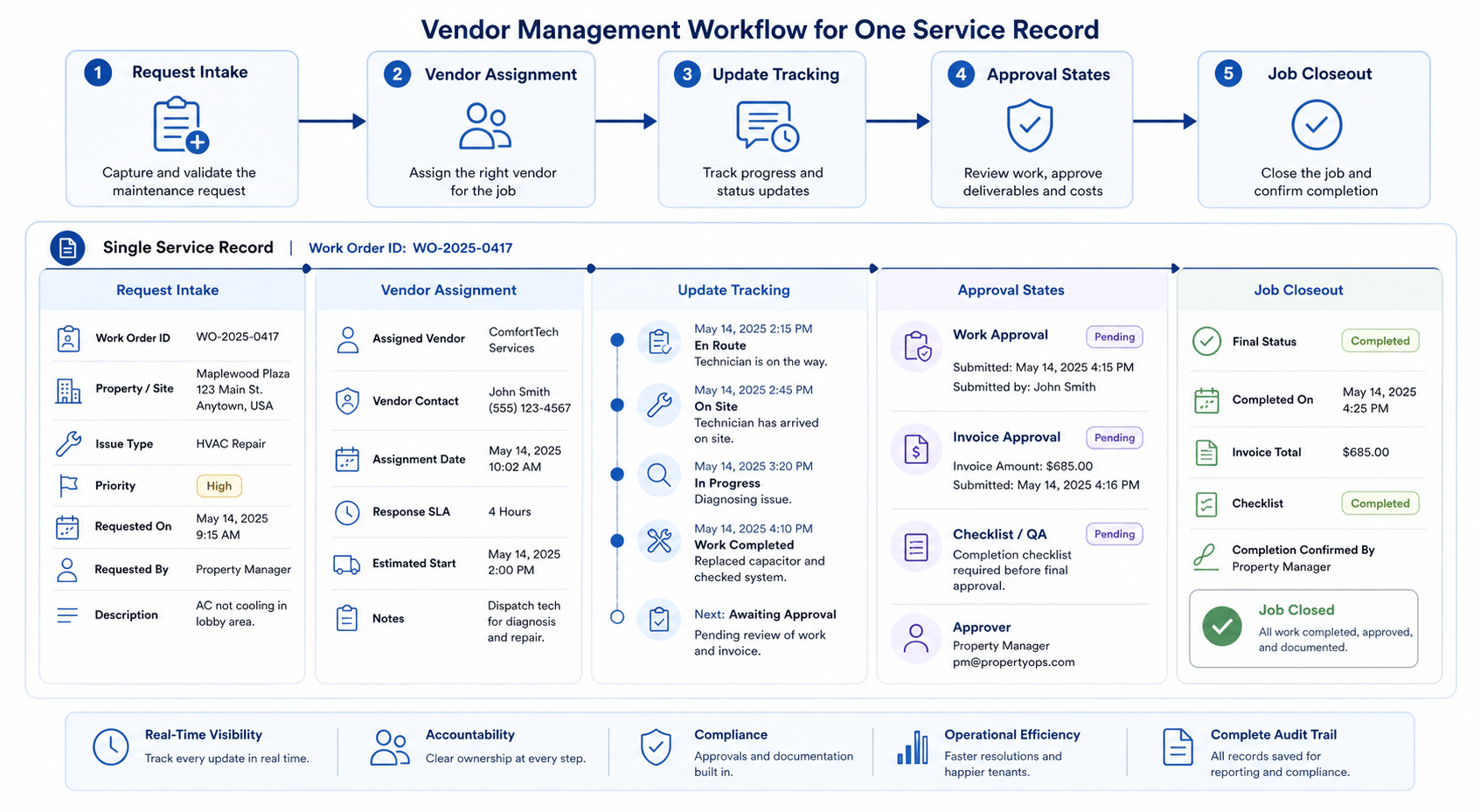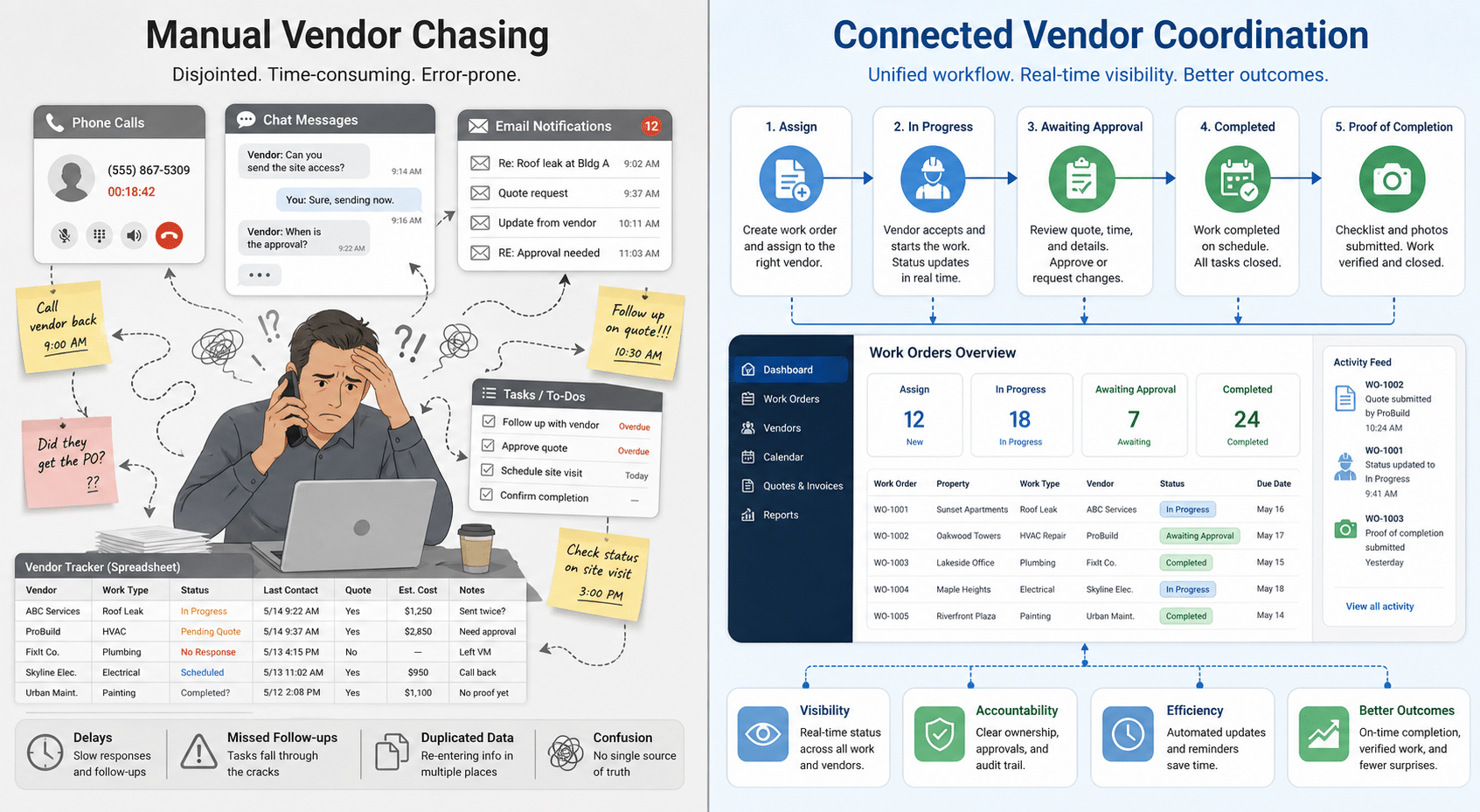


Short answer: vendor management software for property maintenance should help teams assign the right contractor quickly, track updates in one place, verify completion clearly, and compare vendor performance across sites. If contractor coordination still depends on phone calls, forwarded messages, and manual status chasing, the operation will keep losing time and accountability.
That matters because vendor work often sits at the most fragile point in the service chain. The request may be captured correctly and the priority may be obvious, but once a job leaves the coordinator and moves to an outside provider, visibility often drops. Buyers need software that keeps the handoff clean instead of creating another blind spot.
What vendor management software should actually improve
Strong software should help property and facility teams:
- assign vendors by trade, site, region, priority, or contract responsibility
- keep one record for job status, site notes, approvals, photos, and completion proof
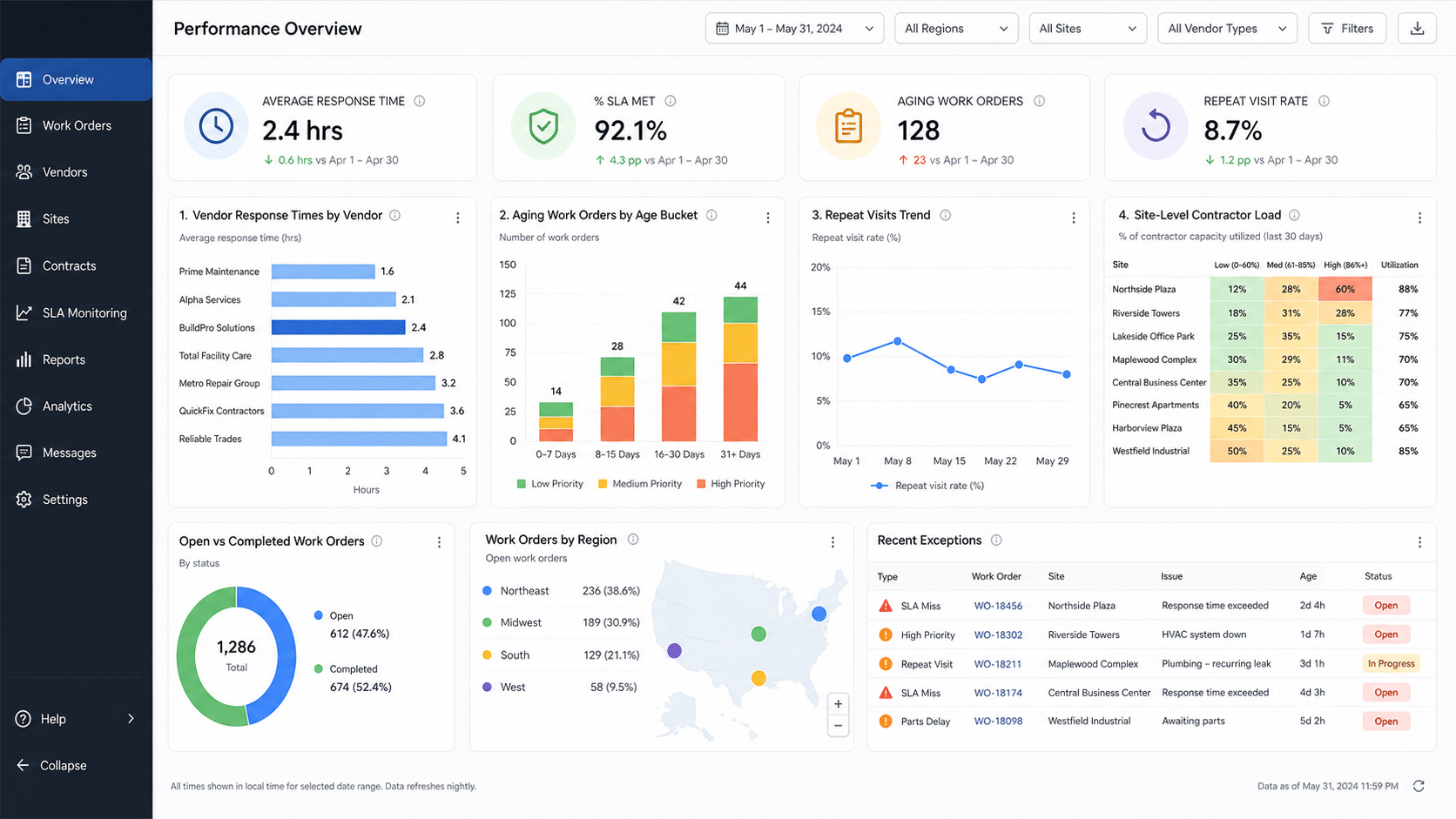
- track response times, aging jobs, revisits, and unresolved follow-up by vendor
- separate jobs waiting on quotation, approval, access, or parts from active service work
- report on contractor reliability across cleaning, aircond, maintenance, and inspection-driven work
That is why contractor coordination works best when it connects work order management, request intake, reporting, and property operations visibility instead of being handled in separate email threads.
Where vendor coordination usually breaks down
1) Assignment is fast, but scope is unclear
Some teams can issue a work request quickly, but the vendor still lacks the right context. Missing photos, weak site notes, unclear urgency, and incomplete asset details create avoidable back-and-forth before the job even starts.
2) Updates come back through the wrong channels
When contractors reply by personal chat, forwarded email, or ad hoc calls, coordinators have to manually rebuild the service record. That makes it harder to know whether the job is progressing, waiting, or already completed.
3) Approvals and quotations slow down service
Waiting for approval is not the same thing as work being ignored, but many teams cannot distinguish the two cleanly. Good software should let managers see which jobs are delayed by commercial decisions and which ones are actually stuck in the field.
4) Performance reviews are too subjective
Without one record of response times, completion dates, revisit frequency, and issue types, vendor reviews become opinion-heavy. Better software gives operators evidence they can use when reassigning work, tightening service expectations, or deciding whether to keep a contractor on the panel.
A better vendor-control workflow
- convert incoming issues into structured work records with complete site context
- route jobs to approved vendors by trade, contract scope, or location
- track updates, waiting reasons, photos, and completion proof inside the same job record
- flag overdue vendor work and unresolved follow-up automatically
- review response time, closure trends, and repeat issues by contractor
- use the same data to improve panel selection and escalation rules
That workflow is commercially relevant for NinjaSuites because many property teams do not just need a vendor directory. They need a connected operating layer that keeps outside work visible from assignment through closeout.
What buyers should ask before choosing the platform
- Can the platform track contractor jobs, quotes, waiting reasons, and completion proof in one place?
- Can managers compare vendor response times and repeat issues across sites?
- Can the same workflow handle cleaning, aircond, inspection follow-up, and general maintenance work?
- Can internal staff and vendors work from the same service record without duplicate updates?
- Can overdue vendor work feed directly into backlog and SLA reviews?
Why this is commercially relevant for NinjaSuites
NinjaSuites is a strong fit for operators who need vendor coordination connected to request intake, work execution, reporting, and service accountability. That matters for portfolios where external contractors handle a large share of day-to-day execution but managers still need one source of truth for status, proof, and performance.
If your team is chasing vendors across calls, chats, and email chains, book a NinjaSuites demo. Buyers who want to evaluate related workflows can also review facility and property management workflows, reporting, and pricing.
FAQ
What is vendor management software for property maintenance?
It is software that helps property teams assign contractor work, track updates, keep supporting records together, and review vendor performance over time.
Why do property teams lose visibility after assigning a vendor?
Because updates often return through disconnected channels, which makes it difficult to keep one usable record of progress, blockers, and proof of completion.
Should vendor management connect to work orders and SLA reporting?
Yes. That connection helps operators see whether vendor delays are affecting overdue work, repeat issues, and service expectations across the portfolio.